China Top Storage Container Conversions for Global Buyers

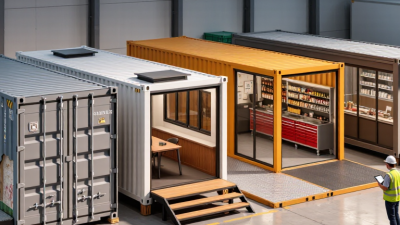
China’s top storage container conversions offer practical options for global buyers seeking secure, adaptable, and cost-conscious spaces. These projects can transform standard shipping containers into offices, workshops, retail units, site cabins, and compact storage rooms. Each conversion should match its intended use, local climate, transport route, and installation conditions. A coastal project may need stronger corrosion protection, while a cold-region office requires better insulation and sealed windows. Details matter.

Experienced manufacturers usually begin with drawings, material lists, and clear technical discussions. Buyers should verify steel condition, welding quality, paint systems, insulation thickness, electrical components, and door performance. Factory photographs help, but independent inspection provides stronger evidence. Small defects matter. Suppliers should also explain loading methods, delivery limits, certifications, and maintenance needs before production begins. Requirements vary between countries, so local professionals should confirm building, electrical, fire, and transport rules.

Not every supplier offers the same level of control. Some product pages look impressive, yet their specifications remain incomplete. That is worth questioning. Reliable cooperation depends on documented quality checks, realistic lead times, responsive communication, and transparent pricing. A useful purchase agreement should describe dimensions, finishes, fittings, testing, packaging, and acceptance standards. Buyers can reduce surprises by requesting a sample layout or factory video before placing a larger order. Even then, no conversion is perfect. Careful review remains necessary. With practical planning and honest verification, Chinese storage container conversions can become durable, efficient assets for lawful commercial and industrial applications worldwide.

China Top Storage Container Conversions for Global Buyers

Storage Container Conversion Types Made in China

China-made storage container conversions cover several practical formats. Standard dry containers suit tools, spare parts, archives, and site storage. Side-opening units improve access for pallets and long equipment. Open-top conversions help store bulky items, although weather sealing needs careful inspection. Refrigerated conversions support temperature-sensitive storage, but insulation, drainage, and electrical capacity require professional design.

UNCTAD’s Review of Maritime Transport 2024 recorded about 12.3 billion tons of seaborne trade in 2023. This scale keeps container availability and conversion demand closely connected. In my experience, buyers often focus on steel condition first. That is not enough. Floor loading, door alignment, ventilation, paint thickness, and weld quality affect daily reliability. A clean interior can still hide corrosion beneath the floor.

Workshop containers may include lighting, sockets, shelving, windows, and personnel doors. Office conversions usually add insulation, flooring, climate control, and fire-resistant materials. Modular storage rooms can also combine several units with sealed joints.

The 2023 World Bank Logistics Performance Index highlights reliability and shipment timeliness as key logistics factors. Therefore, buyers should request drawings, material specifications, load calculations, and factory inspection records. Small omissions matter. For example, a poorly positioned vent may create condensation around stored metal parts. I have seen layouts that looked efficient on paper but wasted valuable aisle space. Local building rules, electrical standards, and foundation conditions must be checked before installation.

Key Features of High-Quality Converted Containers

UNCTAD’s Review of Maritime Transport 2024 recorded 2.4% growth in global seaborne trade during 2023. This demand keeps converted storage containers practical for farms, workshops, and construction sites. High-quality units begin with structurally sound cargo boxes, not cosmetic repainting.

Inspect the corner posts, bottom rails, roof bows, and floor frame for distortion or deep corrosion. ISO 668 dimensions help buyers confirm compatibility with handling equipment and transport plans. A valid CSC safety plate also supports safe international movement when required. Door seals should close evenly, without light entering around the edges.

Ventilation matters in humid climates. Galvanized vents, raised flooring, and drainage gaps can reduce condensation and stagnant air. Marine plywood floors should remain firm under pallet loads. Field inspections often find hidden softness near door thresholds. Small defects become expensive after installation.

Coatings need proper surface preparation. Rust converter alone is not a durable repair. Ask for steel thickness records, weld photographs, coating specifications, and water-ingress test results. The International Energy Agency reports that buildings remain responsible for about 30% of global energy demand, so passive ventilation and daylight features deserve attention in converted workspaces. Buyers should still verify local fire, electrical, and planning requirements. Standards help, but paperwork cannot replace a careful inspection.

Customization Options for Global Buyers

China Top Storage Container Conversions for Global Buyers

Customization Options for Global Buyers

China-made storage container conversions can be adapted for farms, workshops, offices, and temporary project sites. Buyers can choose insulated wall panels, steel shelving, ventilation, lighting, windows, doors, and secure locking systems. Interior layouts may include tool zones, clean storage areas, or compact workstations. A 20-foot unit often suits limited sites, while a 40-foot model offers more usable floor space.

Material selection affects safety and service life. Galvanized components resist moisture, but coastal buyers may need stronger corrosion protection. Insulation thickness should match the local climate, not only the purchase budget. Electrical systems require region-compatible voltage, wiring, and inspection documents. In my experience, detailed drawings prevent costly changes during production. However, early measurements can still be wrong. Site access and lifting equipment deserve another review.

Tips: Send exact dimensions, loading requirements, climate details, and delivery-site photos. Ask for material specifications, weld-quality checks, coating details, and a pre-shipment inspection. Confirm whether flooring can support heavy machinery. Request sample drawings before approving the final layout. Small choices matter. A misplaced door can reduce storage efficiency, while insufficient ventilation may damage tools or packaged goods. Buyers should also clarify assembly instructions, spare parts, warranty terms, and local compliance needs before payment.

Quality Standards, Inspection, and Export Compliance

China’s storage container conversions require more than fresh paint and a locked door. Buyers should verify ISO 668 dimensions, ISO 1496 structural requirements, and steel thickness records. Welds need visual checks, while floors require inspection for rot, oil damage, and uneven loading points. Small defects matter.

UNCTAD’s Review of Maritime Transport 2024 states that maritime shipping carries over 80% of global merchandise trade by volume. It also recorded 2.4% growth in maritime trade during 2023. For containers entering international transport, a valid CSC safety plate may be required. Inspectors should match its number with production records and examine corner castings, doors, seals, and roof repairs. A clean exterior can hide internal corrosion.

Export compliance depends on accurate paperwork. The commercial invoice, packing list, HS classification, certificate of origin, and shipping marks should describe the conversion honestly. Wood packaging should meet ISPM 15 treatment rules. The World Bank’s Logistics Performance Index 2023 highlights customs speed and predictability as important trade factors. That is practical evidence, not just theory. Photographs should show serial numbers, welds, drainage points, and internal measurements. No inspection process is flawless. We still recommend independent checks before loading, because rushed approvals can create expensive disputes after arrival.

China Top Storage Container Conversions for Global Buyers

Quality Standards, Inspection, and Export Compliance

The chart compares nominal external lengths defined for common ISO freight-container formats. Converted storage units should retain the original container identification and CSC safety information, while the CSC plate remains the controlling reference for maximum gross mass and payload. Export preparation should also verify structural condition, door operation, lifting points, markings, and applicable wood-packaging requirements under ISPM 15.

How to Select the Right Chinese Container Supplier

China Top Storage Container Conversions for Global Buyers

How to Select the Right Chinese Container Supplier

Selecting a Chinese container supplier requires more than comparing prices. Start by checking the factory’s experience with your required conversion, such as offices, workshops, storage rooms, or mobile units. Ask for recent project photos, production drawings, and material specifications. Clear evidence matters.

Inspect the container structure carefully. Confirm steel thickness, floor loading, door dimensions, roof sealing, insulation, ventilation, and paint preparation. Request a sample or arrange an independent inspection before shipment. Small welding defects can become serious problems after months of rain, salt air, and repeated use. Do not trust attractive photos alone.

Review the supplier’s quality process and export documents. A reliable factory should explain production stages, inspection points, packaging methods, and warranty limits in writing. Check whether the quoted price includes conversion work, electrical components, delivery preparation, and spare parts. Hidden exclusions are common.

Communication is also a practical test. Send the same technical list to several suppliers and compare their answers. A professional team will identify unclear details instead of promising everything immediately. That honesty is valuable. Still, supplier selection is never perfect. I would keep a small contingency budget, because custom dimensions, port requirements, and design changes can affect the final cost. Track every revision, approval, and inspection result. A simple record can prevent an expensive misunderstanding.

China Top Storage Container Conversions for Global Buyers - How to Select the Right Chinese Container Supplier
Category Container Type or Conversion Typical Specifications or Data Best-Fit Applications Key Supplier Selection Criteria
Standard Base Unit 20-foot standard dry container External dimensions are approximately 6.06 m long × 2.44 m wide × 2.59 m high. Internal dimensions are commonly about 5.90 m × 2.35 m × 2.39 m, with an internal volume of approximately 33 m³. Exact dimensions and payload vary by manufacturer and build specification. Small storage units, tool rooms, agricultural storage, archive storage, and compact workshops. Confirm structural condition, door operation, floor load rating, corrosion level, roof watertightness, and the container’s maximum gross mass shown on its safety plate.
Standard Base Unit 40-foot standard dry container External dimensions are approximately 12.19 m long × 2.44 m wide × 2.59 m high. Internal dimensions are commonly about 12.03 m × 2.35 m × 2.39 m, with an internal volume of approximately 67 m³. Large-volume storage, furniture storage, warehouse overflow, palletized goods, and long equipment. Check internal length, usable door opening, floor condition, ventilation, loading access, and whether the delivery site can accommodate the full vehicle and turning radius.
High-Capacity Base Unit 40-foot high-cube dry container External height is approximately 2.90 m, compared with about 2.59 m for a standard unit. Internal height is commonly about 2.69 m, and internal volume is approximately 76 m³. High shelving, bulky goods, workshop conversions, retail storage, and projects requiring additional headroom. Verify transport height restrictions, lifting requirements, roof reinforcement, and whether added internal height affects insulation, lighting, or suspended equipment.
Access Conversion Personnel door and access system A conversion may include a steel personnel door, emergency exit, lockable access door, or additional cargo doors. Door size, swing direction, threshold height, hinges, locks, and weather seals should be specified in the approved drawing. Offices, workshops, site stores, kiosks, maintenance rooms, and frequently accessed storage areas. Request door hardware details, security classification, corrosion protection, water-ingress testing, and photographs of the completed installation before shipment.
Light and Air Conversion Windows, vents, louvers, and electrical cable entries Openings should be reinforced with suitable framing. Passive vents help reduce condensation, while powered ventilation may be required for occupied or heat-generating spaces. Electrical penetrations should use sealed glands or equivalent weatherproof fittings. Site offices, guard rooms, workshops, equipment rooms, and document storage. Confirm opening positions, frame reinforcement, insect screens, rain protection, cable-entry seals, electrical standards, and the planned ventilation rate.
Organization Conversion Shelving, racking, partitions, and workbenches Internal fittings should be designed around the container’s usable width and door opening. Shelving must be anchored or braced to prevent movement during transport and use. Point-load limits should be confirmed for the steel floor and any raised floor system. Parts storage, archives, tools, spare components, retail stock, and maintenance operations. Obtain layout drawings, shelf load ratings, anchoring details, aisle clearances, coating specifications, and a statement of the maximum distributed and point loads.
Thermal Conversion Insulated storage or temperature-controlled room Insulation thickness, vapor control, internal lining, cooling capacity, drainage, and temperature range must be engineered for the intended climate and load. A simple insulated shell is not equivalent to a certified refrigerated container. Temperature-sensitive materials, food-related storage, electronics, laboratories, and climate-controlled workspaces. Require thermal calculations, equipment specifications, energy consumption data, control settings, condensate management, test records, and local electrical compliance documents.
Security Conversion Enhanced anti-intrusion storage unit Common features include protected lock housings, internal deadlocks, security bars, alarm wiring, motion sensors, and tamper-resistant access points. Security performance depends on the complete assembly rather than one individual component. High-value equipment, tools, chemicals subject to local rules, documents, and remote storage sites. Define the required threat level, inspect weld quality, verify lock protection, review alarm compatibility, and request independent testing where a formal security rating is required.
Surface Protection Repainting and corrosion-control package A proper package normally includes surface preparation, compatible primer, finish coating, repaired weld areas, and dry-film thickness records. Coating systems should be selected for the destination climate and exposure conditions. Coastal areas, humid climates, industrial sites, outdoor storage, and long-term installations. Specify preparation method, coating system, color reference, target dry-film thickness, salt-spray or corrosion documentation where applicable, and warranty terms.
Floor and Hygiene Marine plywood floor, replacement floor, or washable lining Many dry containers use hardwood-based plywood flooring, but floor type, thickness, treatment, and condition differ. A washable lining may be needed for hygienic or liquid-handling applications. General storage, workshops, food-related areas, equipment rooms, and chemical-compatible applications subject to local regulations. Confirm flooring material, load rating, moisture condition, treatment documentation, slip resistance, chemical compatibility, and whether the floor is suitable for pallet trucks or forklifts.
Fabrication Quality Welding, reinforcement, and structural modification Cutting sidewalls, roofs, or corner areas can affect structural performance. Modified units should use engineered reinforcement, qualified welding procedures, drainage details, and verified lifting points where required. Units with large openings, multiple doors, heavy shelving, roof-mounted equipment, or stacked installations. Request fabrication drawings, material grades, weld inspection records, reinforcement details, lifting calculations, and confirmation that modifications do not compromise handling or stacking requirements.
Compliance Documents Inspection and shipment documentation Depending on the project, relevant documents may include commercial invoice, packing list, product drawings, material certificates, electrical test reports, coating records, and container identification details. Import and installation requirements vary by destination. Commercial imports, public-sector projects, regulated facilities, and multi-unit orders. Agree on the document package before production, identify the importer of record, confirm labeling requirements, and verify whether destination-country inspection or certification is mandatory.
Factory Verification Pre-shipment inspection and functional testing A practical inspection should cover dimensions, welds, doors, windows, seals, roof, floor, electrical systems, lighting, ventilation, coating, labels, and accessories. Photographic records should match the unit identification number. All customized container orders, especially multi-unit or repeat-production projects. Use an agreed inspection checklist, define acceptance tolerances, approve a production sample, record nonconformities, and establish corrective-action and reinspection procedures.
Supplier Evaluation Manufacturing and project-management capability Evaluate whether the supplier can control design, steel fabrication, electrical work, insulation, painting, packing, and logistics as one coordinated process. Capacity should be matched to the order size and delivery schedule. Custom projects, recurring procurement, international tenders, and large fleet requirements. Review factory photos or an audit report, quality-control procedures, engineering resources, subcontractor controls, production lead time, export experience, and after-sales response process.
Commercial Comparison Total landed cost Compare the container price together with customization, internal fittings, inspection, packing, inland transport, ocean freight, insurance, duties, taxes, unloading, foundation work, and installation. Budget planning and supplier shortlisting. Ask for a line-item quotation, define Incoterms clearly, separate optional items, confirm validity period, and calculate cost per usable square meter or cubic meter rather than comparing headline prices only.
Delivery Planning Site access, foundation, lifting, and placement A level, adequately drained foundation is generally required. Site conditions may call for concrete pads, steel supports, ground beams, or another engineered base. Delivery requires sufficient road access and suitable lifting or unloading equipment. Permanent storage yards, construction sites, farms, factories, and remote locations. Provide site dimensions, ground conditions, route restrictions, crane or unloading requirements, placement tolerances, and local permits before finalizing the design.
Scroll to Top