
10 Tips for Buying Dinosaur Fossils Online Legally

Buying Dinosaur Fossils online can feel exciting, especially when a detailed specimen appears on your screen. A carefully prepared listing may show the fossil’s size, rock matrix, restoration, and collection history. Yet attractive photographs cannot prove legal ownership. Buyers need patience, documentation, and realistic expectations before making a payment. A fossil that looks exceptional may contain repairs, casts, or undisclosed reconstruction. Small details matter.

This guide presents ten practical tips for purchasing Dinosaur Fossils through lawful and responsible channels. It explains how to assess seller credibility, request provenance records, verify export and import requirements, and review certificates or permits where applicable. Regulations differ between countries, regions, and fossil types, so professional advice may be necessary. Museum curators, qualified paleontologists, and established dealers can provide valuable guidance. Their opinions may not always be free, but reliable expertise can prevent expensive mistakes.

Look closely. Ask questions.

A trustworthy seller should explain where the specimen was found, how it was collected, and whether restoration occurred. Clear invoices, photographs from several angles, secure packaging details, and a written return policy also strengthen buyer confidence. Some listings remain incomplete, even when the seller seems sincere. That uncertainty deserves attention, not dismissal. Responsible collecting protects scientific information, respects local heritage, and supports a transparent fossil market. The safest purchase is not always the largest or most dramatic specimen; it is the one with credible documentation and a lawful, verifiable history.
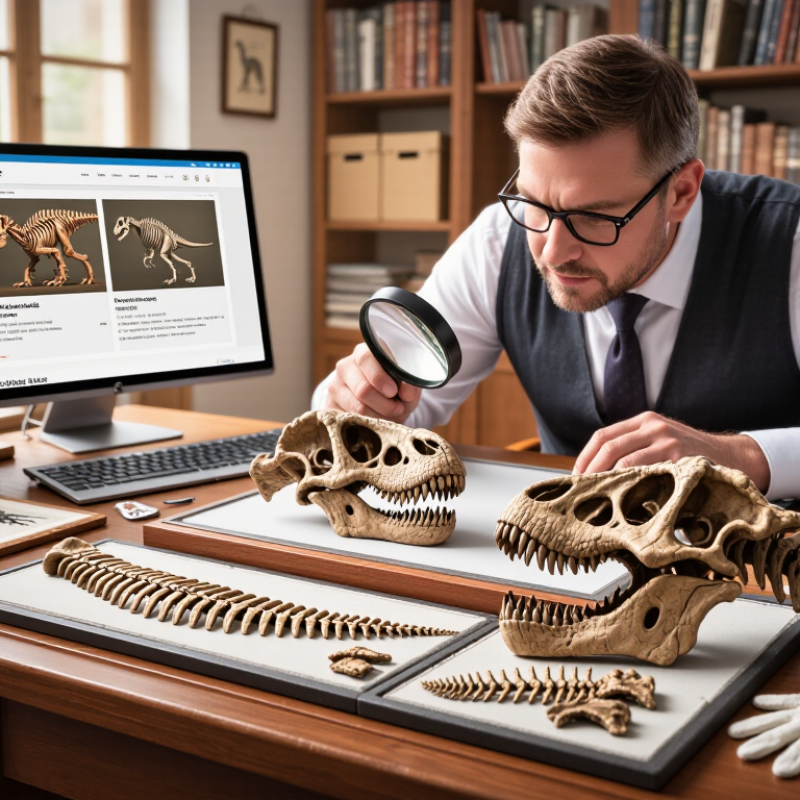
10 Tips for Buying Dinosaur Fossils Online Legally

Define the Legal Status of the Dinosaur Fossil You Want

Before buying a dinosaur fossil, identify its legal status in the country of origin and your own country. Laws may differ between private land, public land, and protected heritage sites. A fossil collected on private property is not automatically legal to sell or export. Some regions require excavation permits, ownership records, or export approval. Others restrict the commercial trade of scientifically important specimens.

Ask the seller for specific documents, not general assurances. Useful records may include the discovery location, landowner permission, excavation permit, export certificate, import documents, and a clear chain of ownership. Check whether the paperwork matches the fossil’s description, photographs, and stated age. A small label and vague invoice are not enough. They can hide serious gaps.

Consult a qualified paleontologist, museum specialist, or government heritage office before payment. Independent advice matters most when the fossil is rare, expensive, or unusually complete. I would pause if the seller pressures me to pay quickly. That is not proof of wrongdoing, but it deserves attention. I also recognize my limits: photographs cannot confirm every legal or scientific detail. A fossil can look authentic yet lack lawful ownership history. Keep copies of every document, including messages and customs records, and ask written questions about restrictions on resale, transport, and display.

Research Seller Credentials and Fossil Documentation

Buying dinosaur fossils online legally begins with the seller, not the specimen photograph. Check how long the seller has operated and whether qualified specialists support their claims. Look for verifiable credentials, professional memberships, and a physical business address. A polished website proves very little. It may still hide gaps.

Ask for complete documentation before discussing payment. Important records can include the fossil’s locality, discovery history, ownership chain, export permission, and import records. Requirements differ between countries and fossil types. A responsible seller should explain those differences clearly. They should not pressure you to accept vague wording, altered invoices, or “private collection” claims without evidence. Request high-resolution images showing the matrix, repairs, labels, and any restoration. Tiny details matter.

Independent verification is worth the cost. A paleontologist, museum professional, or qualified fossil appraiser can identify inconsistent preparation marks and unrealistic descriptions. I have learned that certificates can look official while answering very few useful questions. That mistake is easy to make online. Ask whether the expert examined the actual specimen or only a photograph. Keep every message, invoice, and document in one file. If the seller refuses reasonable questions, pause the purchase. A legally sourced fossil should have a traceable story, even when that story is imperfect. հենց

Verify Ownership History and Export Restrictions

Before buying a dinosaur fossil online, ask for its complete ownership history. A reputable seller should explain where the specimen was found, when it was collected, and who legally owned it. Request dated invoices, collection permits, export documents, and previous sales records. Clear paperwork matters more than an impressive photograph. Examine labels closely. They should match the specimen, location, and stated age. If records begin only with the current seller, pause before paying. The history may be incomplete.

Export restrictions deserve equal attention. Laws differ between the country of origin, the seller’s location, and your destination. Some jurisdictions restrict fossil collection, sale, or export, while others require official permits. Ask the seller to identify the applicable authorities and provide copies of permits for verification. Do not rely on vague claims such as “customs approved it before.” Contact a museum, customs office, or qualified heritage specialist independently. Written confirmation is safer than informal advice. Keep every document, including messages and payment records.

Be cautious with rare species, freshly prepared specimens, and unusually low prices. Those details do not prove wrongdoing, but they deserve questions. I would rather lose one attractive fossil than inherit a legal problem. Even careful buyers can misunderstand changing rules. My own judgment can be incomplete. That is why independent verification remains essential.

10 Tips for Buying Dinosaur Fossils Online Legally - Verify Ownership History and Export Restrictions

Tip What to Verify Useful Evidence Warning Signs Legal and Practical Note
1. Request a complete provenance history Ask where the fossil was found, when it entered private ownership, and how it changed hands. Invoices, previous sale records, collection references, excavation notes, and dated photographs. Vague statements such as “old collection” without dates, locations, or supporting documents. A documented chain of ownership helps establish lawful possession but does not replace required permits.
2. Identify the exact country and site of origin Confirm the country, region, formation, and approximate locality where the specimen was collected. Field labels, locality reports, geological descriptions, and consistent documentation. “Somewhere in Asia,” changed locality information, or a seller unwilling to disclose the origin. Fossil ownership and collecting rules differ by jurisdiction and may differ between public and private land.
3. Check whether the fossil came from public or private land Determine who controlled the land at the time of discovery and whether collection was authorized. Landowner permission, collecting authorization, excavation permit, or government release documentation. Claims that the specimen was “found on public land” without a permit or ownership explanation. In some jurisdictions, fossils from public land are government property or subject to special collecting rules.
4. Verify export permission from the origin country Find out whether the specimen legally left its country of origin and whether an export permit was required. Export permit, customs declaration, export certificate, or official exemption statement. The seller says permits are unnecessary solely because the fossil is old or already prepared. Many countries regulate fossils as cultural, geological, or natural heritage; export rules can apply even to privately owned specimens.
5. Confirm import requirements before payment Check the destination country’s customs, heritage, wildlife, and quarantine requirements. Written guidance from the relevant customs or heritage authority and the correct tariff or declaration information. A seller promises “guaranteed customs clearance” or suggests inaccurate package descriptions. Importing a legally owned fossil can still be unlawful if required declarations, permits, or taxes are not completed.
6. Determine whether the specimen is authentic Distinguish original fossil material from casts, composites, heavily restored pieces, and modern replicas. Independent paleontological assessment, high-resolution images, preparation details, and a written condition report. Unusually perfect completeness, inconsistent texture, concealed restoration, or pressure to buy without inspection. A specimen can be authentic yet illegally collected; authenticity and lawful ownership are separate questions.
7. Ask for restoration and alteration disclosure Identify repaired breaks, filled gaps, added material, stabilizers, dyes, and reconstructed portions. Conservation report, ultraviolet or microscopy images where appropriate, and a written percentage estimate of original material. Descriptions such as “museum quality” without technical condition information. Accurate disclosure protects the buyer and may be important for insurance, valuation, and future resale.
8. Review the sales contract carefully Check the exact description, legal-status warranty, return period, inspection rights, and responsibility for permits. Signed invoice or contract listing specimen identity, provenance documents, condition, price, and delivery terms. Cash-only demands, no written warranty, no return option, or clauses shifting every legal risk to the buyer. Keep copies of the listing, messages, payment record, permits, and shipping documents for the entire ownership period.
9. Use an independent expert before purchase Have a qualified paleontologist, conservator, or specialist review the specimen and paperwork. Written opinion addressing identity, authenticity, restoration, provenance, and documentation gaps. The seller selects the only expert, refuses independent review, or imposes an immediate-payment deadline. Independent review is especially valuable for high-value, unusually complete, or internationally shipped specimens.
10. Pause if any document or legal status is unclear Resolve conflicts between the listing, provenance, permits, specimen labels, and shipping information. Written clarification from the seller and, when necessary, advice from the relevant government authority or qualified legal adviser. Backdated paperwork, altered labels, contradictory dates, suspiciously low prices, or instructions to mislabel the shipment. Do not complete the transaction until the ownership history, export status, import requirements, and specimen description are consistent.

Important: Fossil laws vary by country, state, province, and land status. Verify requirements with the relevant authorities before purchasing, exporting, importing, or reselling a dinosaur fossil.

Assess Authenticity, Restoration, and Scientific Value

10 Tips for Buying Dinosaur Fossils Online Legally

Assessing a dinosaur fossil begins with its documentation, not its dramatic appearance. Ask for a clear provenance record, ownership history, and lawful export or sale documents. A reputable seller should explain where the specimen was found and how it entered the market. Vague phrases such as “museum quality” prove very little. Request sharp photographs of the matrix, edges, and repaired areas. Compare several views. One image can hide a major flaw.

Restoration is common in fossils, but undisclosed repair is a serious warning sign. Look for filler, painted surfaces, mismatched textures, or unnatural color changes. Ask whether the fossil has been stabilized, reconstructed, or partly cast. Independent examination is valuable, especially for expensive specimens. A qualified paleontologist or fossil conservator may recommend microscopy, ultraviolet inspection, or imaging tests. These checks cost money. They can prevent a costly mistake.

Scientific value deserves equal attention. A complete specimen is not always the most useful one. Accurate location data, rock-layer information, and preparation records may matter more than size. Fossils without reliable context lose much of their research value. Confirm that the sale complies with applicable heritage, wildlife, customs, and export rules. Do not rely only on a seller’s confidence. Even careful buyers can misjudge altered material online. I would pause when answers feel rushed, records conflict, or the price seems strangely low. Excitement is not evidence.

10 Tips for Buying Dinosaur Fossils Online Legally

Geological context helps buyers evaluate a fossil’s scientific value, claimed age, and documentation.

The chart shows the approximate duration of the three geological periods in which non-avian dinosaurs lived. When assessing an online fossil, compare the seller’s claimed period with its provenance, identification, restoration disclosure, export permits, and independent scientific documentation. Geological age alone does not prove authenticity.

Approximate ages and durations are based on the International Chronostratigraphic Chart: Triassic 251.9–201.4 Ma, Jurassic 201.4–145.0 Ma, and Cretaceous 145.0–66.0 Ma.

Complete a Secure Purchase with Proper Records

A legal dinosaur fossil purchase begins with records, not a dramatic photograph. The 2023 Art Basel and UBS Global Art Market Report valued online art sales at $11.8 billion, representing 18% of the market. Fossil sales are different, but the lesson is relevant: digital transactions need stronger documentation.

Ask for a written invoice, seller identity, specimen number, dimensions, restoration notes, and precise provenance. The record should explain where the fossil was collected and how ownership changed. Request export and import permits when required. UNESCO’s treaty database lists more than 140 States Parties to the 1970 cultural-property convention, so international rules can differ sharply.

A seller’s statement that “it is legal” is not enough.

Keep screenshots, payment records, emails, permits, and shipping documents together. Use photographs showing the specimen beside a scale and a dated label. Independent scientific review can identify replicas, composites, or undisclosed repairs.

A clean photo can feel reassuring. It proves very little.

Check the laws of both countries and any regional authority involved. Some jurisdictions restrict excavation, export, or private ownership. Do not rely on vague marketplace descriptions. One weakness remains: provenance records can contain gaps, even in honest transactions. Record those gaps instead of quietly filling them with assumptions. A cautious purchase may feel slower, but it creates evidence you can defend later.

Scroll to Top