
China Top 10 Shipping Container Trailer Suppliers?
Choosing the right China top 10 shipping container trailer suppliers requires more than comparing factory prices. A trailer may look impressive in photographs, yet perform poorly under heavy port traffic. Buyers should examine manufacturing experience, engineering capacity, certifications, and after-sales support. These details often reveal more than a polished website.
This overview focuses on suppliers serving international transport and logistics companies. It considers chassis strength, axle quality, suspension design, braking systems, container locking devices, and corrosion protection. Practical evidence matters. A reliable manufacturer should explain load ratings clearly and provide inspection records, production images, and verifiable customer references. Factory audits can also reveal welding quality, material storage, and final assembly standards.
No ranking is perfect. Market positions may change with pricing, delivery schedules, and regional service coverage. Some suppliers offer excellent customization but limited overseas support. Others provide dependable standard models but fewer engineering options. Buyers should match each supplier with their container sizes, road conditions, fleet volume, and maintenance resources. A trailer designed for one market may need adjustments elsewhere. Small details matter, such as spare-part availability and response times after delivery. This guide aims to provide a balanced starting point, not a final purchasing decision. Careful verification remains necessary before signing a contract.
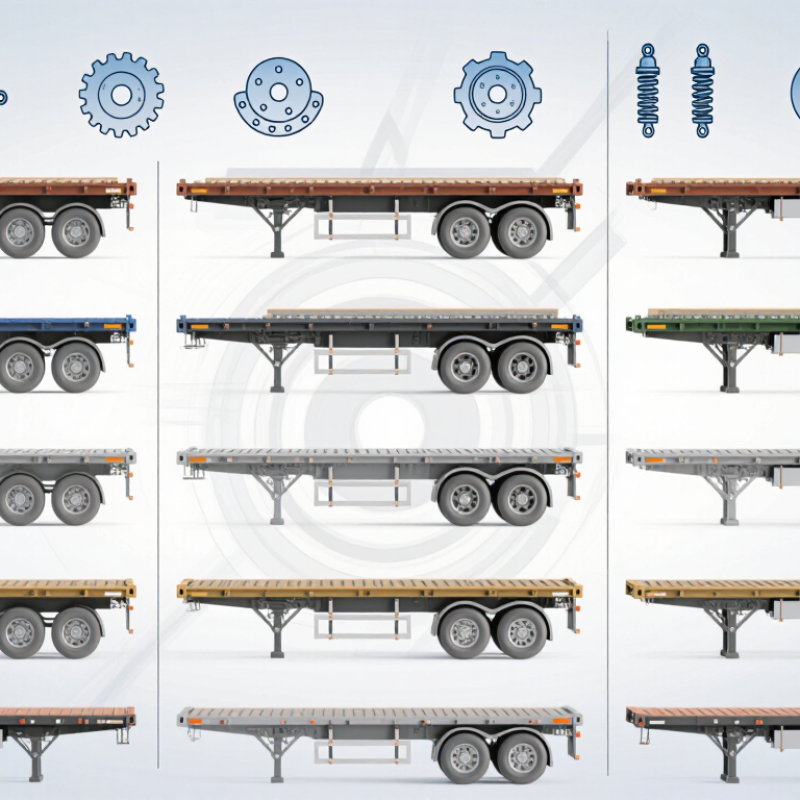
What Defines a Leading Shipping Container Trailer Supplier in China
China Top 10 Shipping Container Trailer Suppliers?
A leading shipping container trailer supplier is defined by more than production capacity. It must understand port operations, road conditions, and daily fleet pressure. Experienced suppliers use high-strength steel, accurate chassis dimensions, and reliable twist-lock systems. These details help containers remain stable during loading and transport.
Quality control should be visible, not simply promised. Inspectors should check weld penetration, axle alignment, brake response, and surface protection. Load testing can reveal frame weakness before a trailer enters service. Clear drawings, inspection records, spare-part lists, and traceable materials also show professional management. However, even experienced buyers can miss small details. A polished factory visit does not always prove long-term durability.
Tips: Ask for recent test records and maintenance feedback from similar applications. Examine the twist locks closely. They should move smoothly without excessive play. Confirm the trailer’s compatibility with your container sizes, towing equipment, and operating routes. Discuss service response times before signing an order. Good communication matters when a trailer stops unexpectedly. Pricing deserves attention, but the cheapest option may create higher repair costs later. A reliable supplier should explain limitations honestly, including delivery risks, coating weaknesses, or component availability. That honesty is not perfect. It is useful.
China Top 10 Shipping Container Trailer Suppliers? - What Defines a Leading Shipping Container Trailer Supplier in China
| Rank | Anonymous Supplier Profile | Core Product Focus | Typical Payload (t) |
Container Compatibility | Frame Material | Suspension Options | Quality & Compliance Evidence | Typical Lead Time | Customization Capability | Benchmark Score (100) |
|---|---|---|---|---|---|---|---|---|---|---|
| 1 | Profile A — Export-Oriented Integrated Manufacturer | Gooseneck and extendable skeletal trailers | 35–40 | 20 ft, 30 ft, 40 ft, 45 ft | High-strength structural steel | Mechanical, air, optional disc | Welding records, load testing, traceable inspection | 30–45 days | High | 94 |
| 2 | Profile B — Heavy-Duty Port Logistics Specialist | Port chassis and tandem container trailers | 36–42 | 20 ft, 40 ft, 40 ft high-cube | Reinforced carbon steel | Air suspension with ABS | Axle documentation, brake testing, dimensional inspection | 35–50 days | High | 92 |
| 3 | Profile C — Modular Chassis Engineering Supplier | Multi-purpose modular skeletal trailers | 34–40 | 20 ft, 40 ft, 45 ft | High-tensile steel sections | Mechanical or air suspension | Design drawings, weld inspection, road-load validation | 35–55 days | Very high | 90 |
| 4 | Profile D — High-Volume Standard Trailer Producer | Standard 20 ft and 40 ft container chassis | 32–38 | 20 ft, 40 ft, 40 ft high-cube | Coated carbon steel | Mechanical, air optional | Factory inspection plan and component certificates | 25–40 days | Medium | 88 |
| 5 | Profile E — Corrosion-Protection Focused Manufacturer | Container chassis for coastal and humid regions | 32–38 | 20 ft, 40 ft, 45 ft | Shot-blasted structural steel | Air suspension available | Coating thickness records and salt-spray test reports | 40–60 days | High | 86 |
| 6 | Profile F — Fleet Replacement and After-Sales Specialist | Fleet-standard chassis and replacement units | 32–36 | 20 ft and 40 ft | Structural steel | Mechanical or air suspension | Spare-parts list, service manuals, warranty process | 25–45 days | Medium | 84 |
| 7 | Profile G — Lightweight Transport Equipment Builder | Weight-optimized skeletal trailers | 30–36 | 20 ft, 40 ft, 40 ft high-cube | High-strength low-alloy steel | Air suspension preferred | Weight records, axle-load calculations, weld inspection | 40–60 days | High | 82 |
| 8 | Profile H — Regional Custom Fabrication Supplier | Custom container platforms and chassis | 30–38 | 20 ft, 40 ft, special lengths | Carbon steel | Mechanical suspension | Drawing approval, material certificates, final inspection | 45–70 days | Very high | 80 |
| 9 | Profile I — Value-Focused Export Manufacturer | Standard container trailers for cost-sensitive fleets | 30–36 | 20 ft and 40 ft | Standard structural steel | Mechanical suspension | Basic factory inspection and component documentation | 30–50 days | Medium | 77 |
| 10 | Profile J — Small-Batch Engineering Workshop | Low-volume special-purpose chassis | 28–35 | 20 ft, 40 ft, project-specific | Fabricated carbon steel | Mechanical or air by specification | Project drawings, prototype checks, final dimensional report | 50–80 days | Very high | 74 |
Related Posts
-
How to Choose the Best Container Trailer for Your Needs?
-
What Are the Top ISO Container Types in 2026?
-
The Rise of Construction Containers Revolutionizing the Building Industry Amidst Sustainability Demands
-

2026 Top Movers Containers for Efficient Relocation Solutions?
-
Exploring the Benefits of Container Trailers for Efficient Transportation Solutions
-
How to Choose the Right Sea Container for Your Business Needs?