What Is a Shipping Container?

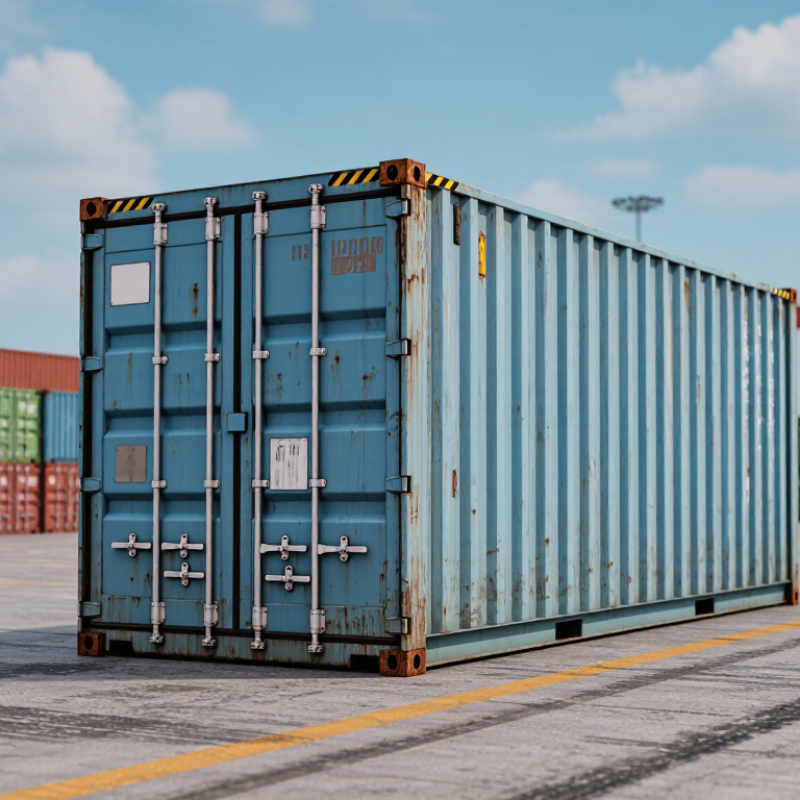
A shipping container is a standardized steel unit designed to move cargo between ships, trains, and trucks. It protects goods from rain, dust, handling damage, and changing transport conditions. Most common models measure 20 or 40 feet long, with sturdy corner posts and locking doors. Their familiar shape supports efficient stacking at ports and terminals worldwide.

It is not simply a metal box. A shipping container follows recognized international dimensions and safety requirements, although its exact condition can vary greatly. New units usually have cleaner floors, tighter seals, and fewer repairs. Used containers may show dents, surface rust, patched panels, or odors from previous cargo. Details matter. A practical inspection should check the roof, door gaskets, floor strength, ventilation openings, and identification markings. In professional logistics work, these checks help prevent moisture damage and loading problems.

Beyond transport, containers now serve as storage rooms, workshops, site offices, and carefully planned architectural spaces. However, converting one requires proper structural assessment, insulation, ventilation, electrical design, and local approval. Cutting large openings can weaken the frame. Poor ventilation can create condensation inside. These risks are sometimes underestimated. A reliable explanation of the shipping container should therefore cover its design, logistics role, condition grades, and responsible reuse. The object looks simple. Its performance depends on standards, maintenance, cargo weight, handling equipment, and human judgment. This article introduces those practical details, while recognizing that container specifications and regulations may differ by location and application.
What Is a Shipping Container?

What Defines a Shipping Container? ISO 668 Standards and Global Interchange

A shipping container is more than a steel box with doors. ISO 668:2020 classifies Series 1 freight containers and specifies their external dimensions and ratings. A common 20-foot unit measures about 6.06 metres long; a 40-foot unit, about 12.19 metres. These standardised dimensions help ships, rail wagons, and terminal equipment handle containers across different transport networks. The corner castings also provide defined lifting and securing points. Small details matter: a few centimetres can affect whether a container fits equipment safely.

Interchangeability is practical, not automatic. ISO 668 works alongside other standards covering container construction, testing, and fittings; operators must also check payload limits and equipment compatibility. UNCTAD’s Review of Maritime Transport 2024 reports that shipping carries over 80% of world trade by volume, underscoring why consistent container dimensions matter to global supply chains. That matters. Still, standards cannot erase wear, repairs, or differences in local handling equipment. A container may meet its design dimensions yet need inspection before use. The standard gives the network a shared baseline, not a guarantee that every box and every piece of equipment will match perfectly.

Common Container Sizes: 20-Foot and 40-Foot Units Measured in TEUs

A shipping container is a reusable steel unit designed to move cargo between ships, trains, and trucks. Its standard size helps equipment and terminals handle it efficiently. A 20-foot container counts as one TEU, or twenty-foot equivalent unit. A 40-foot container counts as two TEUs, although it is not always exactly twice as useful: cargo shape, weight limits, and internal dimensions affect what fits. Typical external lengths are about 6.1 metres and 12.2 metres; both are roughly 2.4 metres wide. Heights and usable space vary by container type and condition. UNCTAD’s Review of Maritime Transport 2024 reported that the global container-ship fleet reached about 30.5 million TEU in 2023, showing how widely this measurement is used across shipping.

Tips: Check the container’s door markings and verified internal dimensions before estimating capacity. A neat TEU ratio can mislead: heavy goods may reach weight limits before filling the available floor space. For a practical check, measure the longest item and leave room for secure loading. Small differences matter.

How Containers Are Built: Corten Steel, Payload, and CSC Safety Rules

What Is a Shipping Container?

How Containers Are Built: Corten Steel, Payload, and CSC Safety Rules

A shipping container is a rigid steel box designed for repeated handling and transport. Most durable units use Corten weathering steel for their panels and framework. This steel develops a protective surface layer after exposure to air and moisture. It is not completely rustproof. Scratches, standing water, and damaged coatings can still cause serious corrosion.

Construction quality depends on more than thick metal. Corner posts carry lifting forces, while cross members support the floor. Marine plywood or similar flooring usually rests on a steel underframe. During inspection, I look closely at roof dents, door alignment, welds, and floor softness. Small defects matter. A container may look sound outside but hide weakened metal inside.

Payload is not simply the weight a container can hold. The permitted cargo weight depends on the maximum gross mass minus the container’s tare weight. Weight must also be distributed evenly across the floor. Heavy cargo placed at one end can strain the frame and create handling risks. This is often overlooked.

CSC safety rules require an approved safety plate and regular examinations. The plate identifies key limits, including gross mass and stacking information. Inspectors check structural condition before continued international use. Dates and markings should be readable. A missing or damaged plate deserves careful verification, not guesswork. Requirements and inspection practices can vary by authority, so records should remain current.

What Is a Shipping Container? — How Containers Are Built: Corten Steel, Payload, and CSC Safety Rules
Category Specification Typical or Required Information
Basic Definition Primary purpose A shipping container is a reusable, rigid cargo unit designed for intermodal transport by ship, rail, and road without unloading the cargo when the transport mode changes.
Standard Size 20-foot general-purpose container External dimensions are approximately 6.06 m long × 2.44 m wide × 2.59 m high. Internal dimensions are typically about 5.90 m long × 2.35 m wide × 2.39 m high.
Standard Size 40-foot general-purpose container External dimensions are approximately 12.19 m long × 2.44 m wide × 2.59 m high. Internal dimensions are typically about 12.03 m long × 2.35 m wide × 2.39 m high.
High-Cube Option 40-foot high-cube container It has the same approximate length and width as a standard 40-foot unit but is about 2.90 m high externally, providing roughly 30 cm of additional internal height.
Construction Material Weathering steel The main structure is commonly made from weathering steel, often called Corten steel. Its protective surface oxidation helps slow further atmospheric corrosion when properly maintained.
Structural Frame Corner posts and corner castings Heavy-duty vertical corner posts and standardized corner castings support stacking, lifting, and securing operations. Lifting and stacking loads are concentrated at these structural points.
Floor System Floor boards and cross-members The floor is usually supported by steel cross-members and durable timber-based boards. Floor capacity depends on the container design, condition, load distribution, and applicable transport limits.
Doors End doors and locking bars Most general-purpose containers use a pair of rear doors with vertical locking bars, door cams, gaskets, and a tamper-evident or security-seal provision.
Ventilation Passive ventilation Small protected vents are commonly incorporated to allow limited air exchange and reduce condensation pressure while helping prevent direct water entry.
Tare Weight Empty container mass A typical 20-foot general-purpose container weighs approximately 2,200–2,400 kg empty. A typical 40-foot general-purpose container weighs approximately 3,700–4,000 kg empty. Actual figures must be read from the container safety plate.
Maximum Gross Mass Container plus cargo Many standard dry containers are rated at approximately 30,480 kg maximum gross mass, although the certified value can vary by container and must be confirmed on its safety approval plate.
Payload Cargo-carrying capacity Payload equals maximum gross mass minus tare weight. Typical practical payloads are about 28,000 kg for a 20-foot unit and about 26,000–28,000 kg for a 40-foot unit, subject to the certified rating, road limits, and cargo distribution.
Volume Internal cubic capacity A 20-foot general-purpose container provides approximately 33 m³ of internal volume. A standard 40-foot unit provides approximately 67 m³, while a 40-foot high-cube unit provides approximately 76 m³.
CSC Convention Purpose of the rules The International Convention for Safe Containers establishes safety requirements for container design, testing, inspection, approval, and continued use in international transport.
CSC Approval Safety approval plate An approved container must display a durable safety approval plate, commonly known as a CSC plate, showing approval information, maximum gross mass, allowable stacking load, and allowable racking test load.
CSC Inspection Inspection scheme Containers are inspected under an approved examination scheme. Under the traditional periodic examination approach, the first examination is generally within five years of manufacture and later examinations at intervals not exceeding 30 months.
Safety Checks Before loading Inspect the corner castings, frame, floor, doors, locking gear, roof, side panels, underside, labels, and safety plate. A container with structural damage or defective locking equipment should not be used until properly assessed and repaired.
Cargo Loading Weight distribution Cargo should be evenly distributed, secured against movement, kept within the certified gross mass, and arranged so that concentrated loads do not exceed the floor or handling capabilities of the container.
Transport Limits Road and terminal restrictions The usable payload may be lower than the container's certified rating because of local road axle limits, vehicle tare weight, bridge restrictions, terminal rules, and shipping-line requirements.
Condition and Maintenance Corrosion and water resistance Weathering steel does not make a container corrosion-proof. Roofs, door seals, floor areas, welds, and lower side rails require regular inspection, cleaning, drainage maintenance, and repair when deterioration affects safety or cargo protection.

How Containers Move: Intermodal Transport by Ship, Rail, and Truck

What Is a Shipping Container?

A shipping container is a strong, reusable steel box built for intermodal transport. It carries cargo without unloading the goods at every transfer. Common units are 20 or 40 feet long, with reinforced corners and lockable doors. Their standard dimensions allow cranes, rail wagons, and trailers to handle the same box.

How Containers Move: Intermodal Transport by Ship, Rail, and Truck

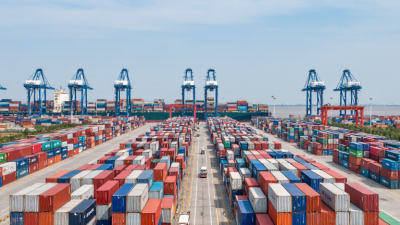
The journey often begins by truck at a factory or warehouse. A driver delivers the loaded container to a terminal, where a crane places it onto a rail wagon or ship. Twist locks hold the container firmly during movement. At a port, large cranes lift boxes between vessels, trains, and waiting trucks. Each mode has a clear role. Ships handle long ocean distances, rail moves heavy loads inland, and trucks provide the final connection.

Timing is less perfect than diagrams suggest. A late truck can miss a train slot. Rain may slow crane work. Rail congestion can extend delivery times by a day or more. Good logistics teams check container numbers, seals, weight records, and transfer appointments at every stage. They also inspect floors, doors, and corner fittings before loading. Small errors become expensive delays.

The container keeps cargo protected, but it does not remove every risk. Poor weight distribution can affect stability. Weak packaging may fail during repeated lifting. In practice, careful documentation and realistic schedules matter as much as the steel box itself.

Container Inspection Cycles: The CSC’s Maximum 30-Month Examination Interval

What Is a Shipping Container?

A shipping container is a reusable steel unit built to carry cargo safely between transport systems. Its corner posts, locking doors, roof, floor, and side panels work as one structure. During a practical inspection, I look for more than fresh paint. A bent corner casting can affect stacking. A damaged door seal can allow rain inside. These details matter when a container travels through ports, rail yards, and roads.

Container Inspection Cycles: The CSC’s Maximum 30-Month Examination Interval

Under the Convention for Safe Containers, a container must be examined at intervals not exceeding 30 months. The 30-month period is a maximum, not a target. The owner or operator must use either periodic examination or an approved continuous examination programme. A competent inspector checks the frame, welds, lifting points, doors, floor, and visible corrosion. The inspection also confirms that the container remains suitable for safe handling and transport.

Small defects can become expensive failures. A cracked weld near a corner post may worsen under repeated lifting. A soft floor area may remain hidden beneath a dry surface. Records should identify the container, inspection date, findings, and next required action. A CSC safety approval plate must also remain legible and consistent with the container’s approval status. In practice, inspections after heavy impacts, major repairs, or unusual events may be needed before the next scheduled cycle. Thirty months can feel generous, but exposure, loading habits, and maintenance quality vary greatly. A fixed calendar cannot replace careful judgment.

What Is a Shipping Container?

Container Inspection Cycles: The CSC Convention requires an initial examination before a container is placed into service and periodic examinations at intervals of no more than 30 months.

The 30-month value represents the maximum permitted interval between periodic examinations under the conventional examination scheme. The initial examination must occur before the container is put into service; it is therefore shown as a pre-service requirement rather than a timed interval.

Scroll to Top