
7 Tips for Buying Ocean Containers Worldwide?
Buying ocean containers worldwide sounds simple until a “low” quote arrives with unclear specifications, inland fees, or hidden damage. A container may look sound outside while its floor smells damp, its doors twist, or its CSC plate has expired.
The market also moves with trade volumes, port congestion, equipment shortages, and regional repositioning costs. UNCTAD’s Review of Maritime Transport 2024 reported that global maritime trade reached about 12.3 billion tons in 2023. It also warned that disruption and rerouting can quickly increase shipping distances and operating costs. These pressures affect container availability and delivery pricing.
Reliability matters as much as price. The World Bank’s Logistics Performance Index 2023 emphasized customs efficiency, infrastructure quality, shipment reliability, and delivery timeliness. Those factors should shape every purchase decision. A cheaper unit in a distant depot may cost more after inspection, trucking, tax, and repositioning charges.
This guide presents seven practical tips for sourcing ocean containers across international markets. It covers container grades, ISO dimensions, CSC certification, inspection records, supplier verification, total landed cost, and delivery planning. The process is not perfectly predictable. Even experienced buyers sometimes overlook local handling charges or seasonal shortages.
Measure twice.
Ask for current photos, serial numbers, door images, roof views, and floor details. Confirm whether the container is wind-and-watertight, cargo-worthy, or suitable only for storage. Check the seller’s trading history and request written terms before payment. Independent inspection remains valuable, especially when the container sits thousands of miles away. Small checks can prevent expensive surprises.
Define Your Container Type, Size, and Intended Use
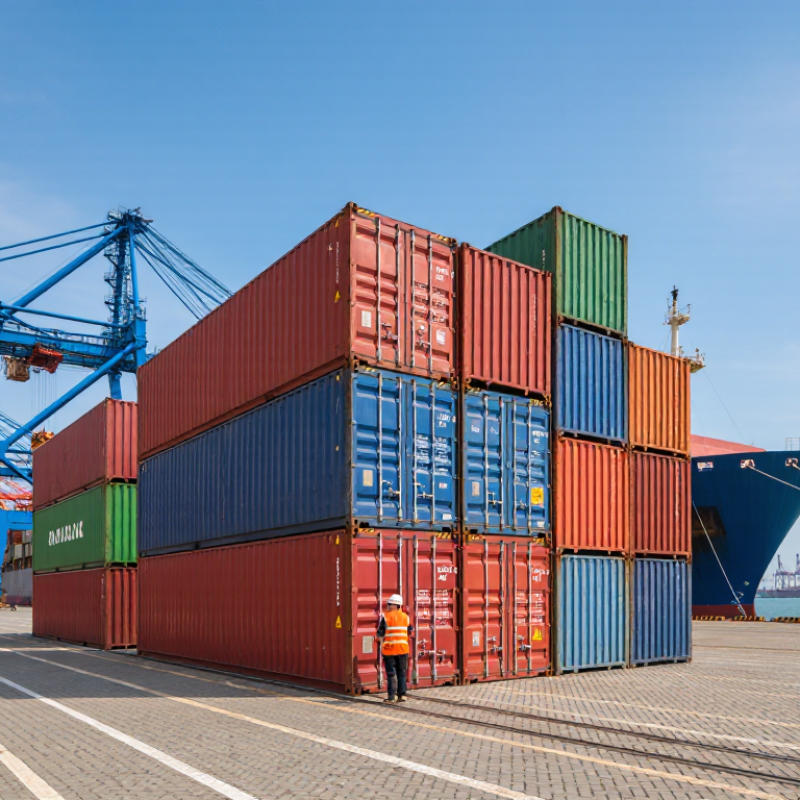
Before buying an ocean container worldwide, define its job. A 20-foot dry container suits dense cargo and smaller sites. A 40-foot unit offers nearly twice the internal volume, about 67 cubic metres under ISO dimensions. However, volume alone misleads. Heavy machinery may exceed the floor or axle limits first. Measure pallets, door clearance, forklift access, and the final unloading route.
For temperature-sensitive cargo, specify a refrigerated container and confirm its operating range. Ask for the latest pre-trip inspection, power requirements, and service history. UNCTAD’s Review of Maritime Transport 2024 states that shipping carries over 80% of global merchandise trade by volume. That scale makes standardisation valuable, but equipment availability still changes by port and season. Local quotations can hide delivery, inspection, and repositioning charges.
Condition matters as much as size. Request clear photographs of the roof, corner posts, floor, doors, seals, and identification plate. A valid CSC safety plate supports international transport, but it does not guarantee a watertight box. Check recent leakage evidence yourself. I once underestimated door distortion after a long sea voyage; the lock worked, but the gasket did not. That mistake was avoidable. For storage or conversion, confirm local planning, fire, insulation, and structural requirements. Containers intended for cargo may need different inspections after modification. The Container xChange 2024 market reports also show significant regional differences in availability and pricing, so compare delivered cost rather than the purchase price alone. Measure twice. Judge the use first.
7 Tips for Buying Ocean Containers Worldwide? - Define Your Container Type, Size, and Intended Use
| Tip | Container Type | Typical External Dimensions | Typical Internal Capacity or Payload | Best-Suited Use | Worldwide Buying Checkpoints |
|---|---|---|---|---|---|
| 1. Define the cargo before choosing the box | General-purpose dry container | 20 ft: approximately 6.06 m × 2.44 m × 2.59 m 40 ft: approximately 12.19 m × 2.44 m × 2.59 m |
20 ft internal volume: about 33 m³ 40 ft internal volume: about 67 m³ Payload depends on the unit and transport limits. |
Cartons, machinery, furniture, packaged goods, and most non-temperature-sensitive cargo | Confirm cargo dimensions, weight, loading method, door clearance, floor condition, and the maximum gross weight accepted on the intended route. |
| 2. Select the correct height and length | 20 ft, 40 ft, or 40 ft high cube dry container | High cube height: approximately 2.90 m externally, about 30 cm higher than a standard container | 40 ft high cube internal volume: commonly about 76 m³ Exact usable space varies with wall, door, and floor design. |
High-volume or tall cargo, lightweight goods, exhibition materials, and storage projects | Choose 20 ft for dense, heavy cargo when weight is the limiting factor; choose 40 ft high cube when cubic volume and internal height are more important. |
| 3. Match the container to temperature requirements | Refrigerated container (reefer) | Common lengths: 20 ft and 40 ft External dimensions are similar to standard containers, but the refrigeration unit reduces internal length. |
Typical internal volume: approximately 28 m³ for 20 ft and approximately 60–67 m³ for 40 ft, depending on design | Temperature-sensitive food, pharmaceuticals, flowers, chemicals, and other controlled-temperature cargo | Verify temperature range, power requirements, pre-trip inspection status, service history, insulation condition, airflow clearance, and acceptable set-point performance. |
| 4. Consider how the cargo will be loaded | Open-top container | Usually available in 20 ft and 40 ft lengths; height is designed for loading through the removable roof area. | Capacity is broadly comparable to a dry container of the same nominal length, subject to the roof and door arrangement. | Over-height machinery, scrap, timber, stone, and cargo loaded by crane or overhead equipment | Check the removable roof, bows, tarpaulin, lashing points, door operation, cargo height, and whether the loaded height complies with the shipping route. |
| 5. Use specialized equipment for oversized cargo | Flat rack container | Common lengths: 20 ft and 40 ft; fixed-end and collapsible-end designs are available. | No enclosed internal volume; payload is based on the frame, floor, and approved operating limits. | Heavy machinery, vehicles, pipes, industrial equipment, and wide or high cargo | Confirm platform dimensions, floor rating, lashing rings, end-wall strength, cargo overhang, securing plan, and any out-of-gauge surcharges. |
| 6. Decide between new and used condition | New-build or used shipping container | Dimensions follow the selected ISO container size and type. | New-build units generally offer more consistent condition; used units may have repairs, dents, corrosion, or patched flooring. | New-build: export shipping and long-term storage Used: budget storage, workshops, temporary sites, and less demanding transport |
Request dated photographs, inspection records, CSC safety-approval details for ocean transport, floor condition, door-seal condition, and a written repair disclosure. |
| 7. Calculate total landed cost, not only purchase price | Any selected container type | Use the exact dimensions and weight shown on the unit's specification plate and inspection documents. | Total cost may include the container, inland transport, port handling, inspection, documentation, taxes, duties, storage, lifting, and delivery equipment. | International purchase, relocation, export shipment, and permanent or temporary storage | Compare delivered cost, local import rules, port availability, chassis or crane requirements, insurance, lead time, payment terms, and after-sales responsibilities. |
Note: Dimensions, internal volume, tare weight, payload, and equipment availability vary by design, manufacturing tolerances, repair history, and local transport regulations. Always verify the individual unit's specification plate and inspection documents before purchase.
Related Posts
-

Top 5 Movers Containers for Global Procurement Needs?
-

What Are the Best Freight Containers for Global Shipping?
-
Top 10 ISO Container Innovations to Watch for in 2025
-

10 Container Solutions Tips Every Global Buyer Needs
-

2025 Top 10 Ocean Containers: Best Choices for Sustainable Shipping Solutions
-
How to Choose Freight Containers for Shipping in 2026?