
What Are the Top ISO Container Types in 2026?
Choosing the top ISO container types in 2026 requires more than listing popular models. An iso container is a standardized steel unit designed for safe, repeatable intermodal movement. Its corner castings, dimensions, and load limits support transfers between ships, rail wagons, and trucks. Yet “top” depends on cargo, route, climate, handling equipment, and service frequency. A 40-foot high-cube may maximize volume, while a 20-foot unit can suit dense machinery better. Small details matter.
This guide compares dry containers, high-cube containers, refrigerated units, open-top containers, flat racks, tank containers, and specialized designs. Each type solves a different transport problem. Dry units remain the everyday benchmark. Reefers protect temperature-sensitive goods through monitored cooling. Open tops simplify loading tall or awkward cargo. Flat racks support heavy, wide items when securing plans are carefully verified. Tank containers carry approved liquids under strict technical controls. Their differences appear in floor strength, internal height, insulation, ventilation, tare weight, and inspection needs.
The discussion draws on practical logistics considerations and recognized ISO container dimensions, while acknowledging that manufacturer specifications can vary. Compliance, maintenance records, CSC-related requirements, and pre-trip inspections should never be treated as paperwork alone. They affect safety at the loading dock. Context changes everything. A ranking can still oversimplify real decisions. Route delays, power availability, port equipment, and seasonal temperatures may change the best choice. Use this overview as a decision framework, then confirm payload, dimensions, certifications, and carrier acceptance before booking. That final check prevents expensive surprises.
What Defines an ISO Container in 2026?
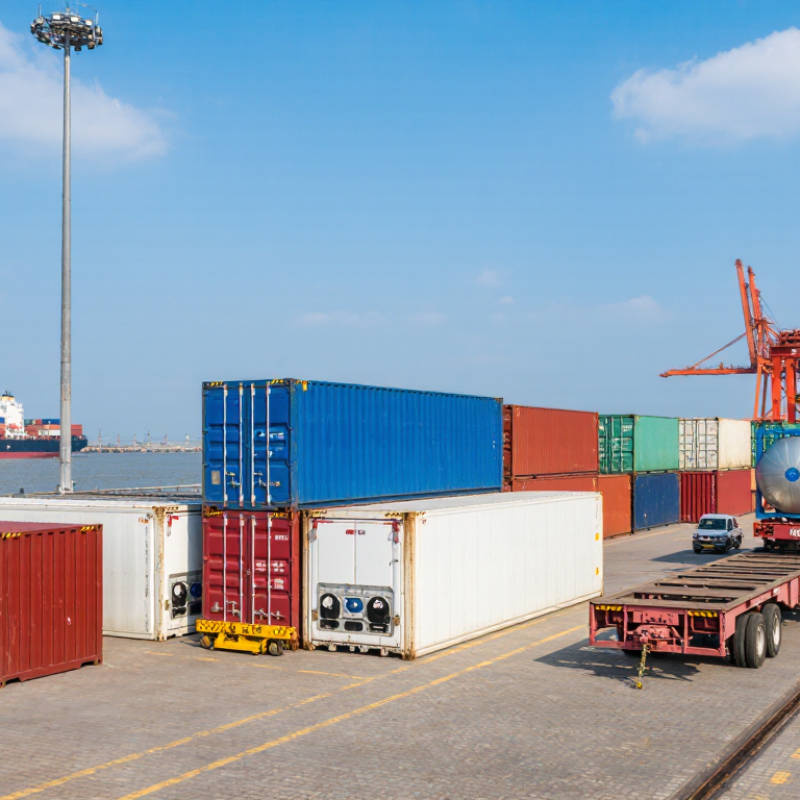
In 2026, an ISO container is more than a steel box with familiar dimensions. It is a freight unit designed and tested around internationally recognized standards. Its length, width, height, corner fittings, stacking strength, and lifting points support intermodal handling. Cranes, rail wagons, chassis, and vessels can move it without repacking the cargo. That practical compatibility defines the container better than its paint or manufacturing location.
A standard dry container remains the common reference, but ISO equipment also includes refrigerated, open-top, tank, and flat-rack types. Each serves a different cargo environment. A reefer needs insulated walls, sealed doors, and temperature-control equipment. A tank container requires a secure vessel, protective frame, and suitable pressure controls. Open-top units handle tall cargo, while flat racks support oversized loads within approved limits. The category alone does not prove fitness.
Reliable identification requires checking the data plate, container number, tare mass, maximum gross mass, and safety approval status. Corner castings should show no serious distortion, and door seals should close evenly. A field inspection may reveal a damaged locking bar that paperwork misses. Small defects matter. The term “ISO” is useful, but incomplete. Standards evolve, and containers still need current inspections, cargo-specific checks, and route-specific verification before serious movement.
How ISO Container Types Are Classified
What Are the Top ISO Container Types in 2026?
ISO container types are classified by more than appearance. ISO 668 groups them by external dimensions, corner fittings, and maximum gross mass. ISO 1496 adds requirements for strength, testing, and special designs. This system helps terminals handle a 20-foot box like a familiar steel module, even across different countries.
The general-purpose container remains the common baseline. High-cube units add approximately 30 centimeters of internal height, useful for lightweight, bulky cargo. Refrigerated containers control temperature with powered equipment. Tank containers carry liquids under specific pressure and safety requirements. Open-top units suit tall cargo, while flat racks support heavy or unusually shaped machinery.
The 2024 UNCTAD Review of Maritime Transport reported that global container ship capacity reached about 28.5 million TEU. That scale makes consistent classification operationally essential, not merely administrative. Drewry’s Container Census also tracks equipment supply, showing why availability can differ sharply by region and container type.
Tips: Check the ISO code, tare weight, maximum gross mass, and inspection plate before loading. Measure the cargo, not just the booking description. A high-cube container may offer more space, but it does not automatically allow more weight. Classification can still feel imperfect in daily operations. Local handling rules, cargo density, and equipment shortages may influence the practical choice. Experienced planners verify both the standard and the actual unit.
Which ISO Container Types Lead in 2026?
In 2026, dry freight containers still lead global use because they handle most packaged cargo efficiently. Their standard sizes simplify vessel planning, rail transfers, and warehouse loading. Refrigerated containers follow closely in temperature-sensitive supply chains. They support produce, frozen food, and medical materials with controlled airflow and recorded temperatures. From practical loading work, small details matter. A poorly placed pallet can block circulation and create uneven cooling. The ranking is not absolute, however. Regional exports and seasonal demand can quickly change the preferred type.
Tank containers remain important for approved liquid cargo because they offer secure handling and efficient intermodal movement. Flat racks and open-top containers serve machinery, timber, and oversized equipment that cannot fit through standard doors. Their use is smaller by volume, but their operational value is high. Careful lashing is essential. I have seen planning assumptions fail when cargo height, center of gravity, or lifting points were checked too late. More data helps, but experienced inspection still matters.
Tips: Match the container to the cargo’s dimensions, weight, ventilation, and temperature needs. Inspect door seals, flooring, corner posts, and safety markings before loading. Leave clearance around refrigerated cargo. Confirm current handling requirements with qualified operators, because equipment standards and port procedures can differ. Document condition with clear photos. That habit prevents many disputes.
What Are the Top ISO Container Types in 2026? - Which ISO Container Types Lead in 2026?
| 2026 Position by General Use | ISO Container Type | ISO Size Classification | Typical External Dimensions | Approximate Internal Volume | Typical Cargo Weight Capacity | Main Cargo Applications | Why It Leads in 2026 |
|---|---|---|---|---|---|---|---|
| 1 — Dominant | General-Purpose Dry Container | 20 ft and 40 ft | Width: about 2.44 m Height: about 2.59 m Length: about 6.06 m or 12.20 m |
About 33 m³ for 20 ft About 67 m³ for 40 ft |
Typically up to about 28.2 t for a 20 ft unit and about 26.7–28.8 t for a 40 ft unit, depending on tare weight and design | Packaged goods, machinery, textiles, retail cargo, palletized freight and general manufactured products | It is the standard intermodal solution, compatible with ships, railways and trucks and suitable for the widest range of dry cargo. |
| 2 — High-volume leader | High-Cube Dry Container | 40 ft and 45 ft | Width: about 2.44 m Height: about 2.90 m Length: about 12.20 m or 13.72 m |
About 76 m³ for 40 ft About 86 m³ for 45 ft |
Generally similar to a standard 40 ft dry container; the practical limit is set by the container rating, tare weight and transport regulations | Lightweight, bulky cargo, furniture, consumer goods, automotive components and high-volume retail shipments | Its additional internal height increases cubic capacity without requiring a longer container, improving space utilization for volumetric cargo. |
| 3 — Temperature-controlled leader | Refrigerated Container (Reefer) | 20 ft and 40 ft; high-cube versions are common | Usually based on 20 ft or 40 ft ISO footprints External width: about 2.44 m High-cube height: about 2.90 m |
About 28 m³ for 20 ft About 59–67 m³ for 40 ft, depending on insulation and equipment |
Commonly lower than an equivalent dry container because of refrigeration machinery and insulation; actual capacity varies by model | Fresh produce, frozen food, pharmaceuticals, chemicals and other temperature-sensitive cargo | Global trade in perishable and temperature-sensitive products continues to require controlled environments throughout intermodal transport. |
| 4 — Flexible-loading specialist | Open-Top Container | 20 ft and 40 ft | Typically the same footprint as a standard dry container Width: about 2.44 m Height: about 2.59 m |
About 32–33 m³ for 20 ft About 65–67 m³ for 40 ft |
Often comparable to dry containers, subject to the particular roof, door and floor design | Scrap metal, timber, stone, machinery and other tall or heavy cargo loaded by crane from above | The removable roof or tarpaulin allows loading of cargo that cannot pass through standard container doors. |
| 5 — Project-cargo specialist | Flat Rack Container | 20 ft and 40 ft | Length: about 6.06 m or 12.20 m Width: about 2.44 m Ends may be fixed or collapsible |
Not normally rated by enclosed cubic volume because the sides and roof are open | Designed for concentrated or oversized loads; allowable payload depends strongly on the frame and load distribution | Heavy machinery, construction equipment, pipes, steel products, industrial modules and oversized cargo | It provides standardized corner fittings and a strong base for cargo that exceeds the height or width limits of enclosed containers. |
| 6 — Liquid-cargo leader | Tank Container | Commonly 20 ft ISO frame | Usually a 20 ft intermodal frame Width: about 2.44 m Length: about 6.06 m Height varies by tank design |
Common capacities range from about 14,000 to 26,000 litres | Depends on liquid density, tank rating and applicable transport regulations; the maximum gross mass is limited by the tank design and route | Food-grade liquids, chemicals, fuels, gases and other bulk liquids | It combines the handling advantages of an ISO frame with reusable, controlled and safer bulk-liquid transport. |
| 7 — Specialized platform | Platform Container | 20 ft and 40 ft | Typically the length and width of a standard ISO container footprint No side walls or roof |
Not applicable as an enclosed container | Suitable for heavy or oversized cargo when the load is correctly distributed and secured according to the approved design | Transformers, industrial machinery, heavy structures, tanks and project cargo | It supports cargo that cannot be accommodated by closed containers while preserving standardized lifting and securing interfaces. |
Note: Dimensions, internal volumes and payloads are typical industry ranges rather than universal specifications. Exact values vary by manufacturer, container series, insulation, tare weight, gross-mass rating, cargo density and local road or rail regulations. Standard references commonly include ISO 668 for container classification and ISO 1496 for specification and testing requirements.
How Each Container Type Serves Different Cargo Needs
What Are the Top ISO Container Types in 2026?
How Each Container Type Serves Different Cargo Needs
Dry containers remain the practical choice for cartons, machinery, furniture, and packaged goods. They protect cargo from rain, dust, and routine handling damage. High-cube versions provide extra internal height for lightweight cargo with bulky dimensions. That additional space can reduce stacking pressure and improve loading efficiency.
Always check the container’s tare weight, internal measurements, and inspection status before planning transport.
Refrigerated containers serve temperature-sensitive cargo such as fresh produce, dairy products, and certain pharmaceuticals. Their cooling units require stable power and careful temperature records throughout the journey.
Open-top containers suit tall machinery and heavy items loaded by crane. Flat racks handle oversized equipment when side or top access is essential. Proper lashing is critical. A small movement can become serious damage during ocean or road transport.
Tank containers are designed for approved liquid cargo, including food-grade and industrial materials. Operators must confirm compatibility, pressure requirements, cleaning records, and current safety certifications.
In practical loading work, cargo dimensions often decide the container type faster than cargo weight. However, that assumption can fail when the center of gravity is high. I have seen loading plans change after a late measurement. That is inconvenient, but better than forcing unsuitable equipment.
Container selection should be checked by trained personnel against current transport standards and verified cargo data.
How to Choose the Right ISO Container Type for Your Shipment
Choosing an ISO container is less about picking the newest type and more about matching cargo, route, and handling conditions. Standard dry containers suit boxed goods, machinery, and pallets. High-cube units add approximately 30 centimetres of internal height, useful for bulky but lightweight cargo. Refrigerated containers protect temperature-sensitive products, although they require reliable power at every transfer point.
The wider context matters. UNCTAD’s Review of Maritime Transport 2024 states that shipping carries over 80% of global merchandise trade by volume. That scale makes small planning errors expensive. For oversized machinery, flat racks or open-top containers may work better than forcing cargo into a dry box. Tank containers are designed for approved liquid cargo and require careful compatibility checks. ISO 668 defines key container dimensions, but dimensions alone do not guarantee a suitable shipment.
Tips: Measure the packed cargo, not the product alone. Check door height, floor loading, ventilation, and gross weight. Ask the carrier about reefer power availability and route restrictions. A high-cube container is not always better; extra space can increase movement and damage risk. In practice, moisture control is often underestimated. I have seen a “suitable” dry container fail when cargo was loaded warm and sealed in humid weather. Review the loading plan, inspection records, and local handling conditions before booking. There is no perfect type.
Related Posts
-
2026 Best Shipping Container Conversions for Your Business?
-

Essential Guide to Shipping Container Doors for Global Buyers?
-

Unlocking the Potential of Shipping Containers: Sustainable Solutions for Modern Logistics
-
2025 Top 10 Ocean Containers: Best Choices for Sustainable Shipping Solutions
-

What Are the Best Freight Containers for Global Shipping?
-
Top 10 Benefits of Shipping Container Storage Units?