How to Choose the Right Cargo Container for Global Shipping
Choosing the right cargo container can determine whether a shipment arrives safely, efficiently, and within budget. The decision begins with the cargo itself, not the shipping quote. Weight, volume, dimensions, fragility, moisture sensitivity, and loading method all matter. A dense machine may require a standard 20-foot container, while lightweight cartons may justify a 40-foot high-cube unit. More space is not always better.
Containerization pioneer Malcolm McLean explained the principle simply: “The idea was to take the truck body off the wheels and put it on a ship.” His insight still shapes global shipping today. A cargo container must connect smoothly with trucks, cranes, rail systems, and vessel equipment. That connection depends on standard dimensions and verified structural condition.
This guide examines standard, high-cube, refrigerated, open-top, and flat-rack options. It also considers payload limits, internal measurements, ventilation, insulation, and cargo securing. A reefer needs stable temperature control, while steel coils may require reinforced flooring and careful weight distribution. Small oversights can become expensive.
Route conditions deserve equal attention. Port handling, inland road limits, weather exposure, and transshipment risks can change the best choice. A spreadsheet helps, but it can still mislead. The cheapest cargo container may create wasted space, handling delays, or damage claims. The most suitable option balances protection, capacity, compliance, availability, and total transport cost. There is no perfect universal answer. Careful verification remains essential.
Define Cargo Container Types and Their Standard Dimensions
How to Choose the Right Cargo Container for Global Shipping
Cargo container types differ by purpose, capacity, and internal clearance. A standard dry container suits cartons, machinery, furniture, and most general cargo. The common 20-foot container measures about 6.06 meters long, 2.44 meters wide, and 2.59 meters high externally. A 40-foot container has similar width and height, but extends to about 12.19 meters. Internal dimensions are smaller and vary slightly by manufacturer and construction.
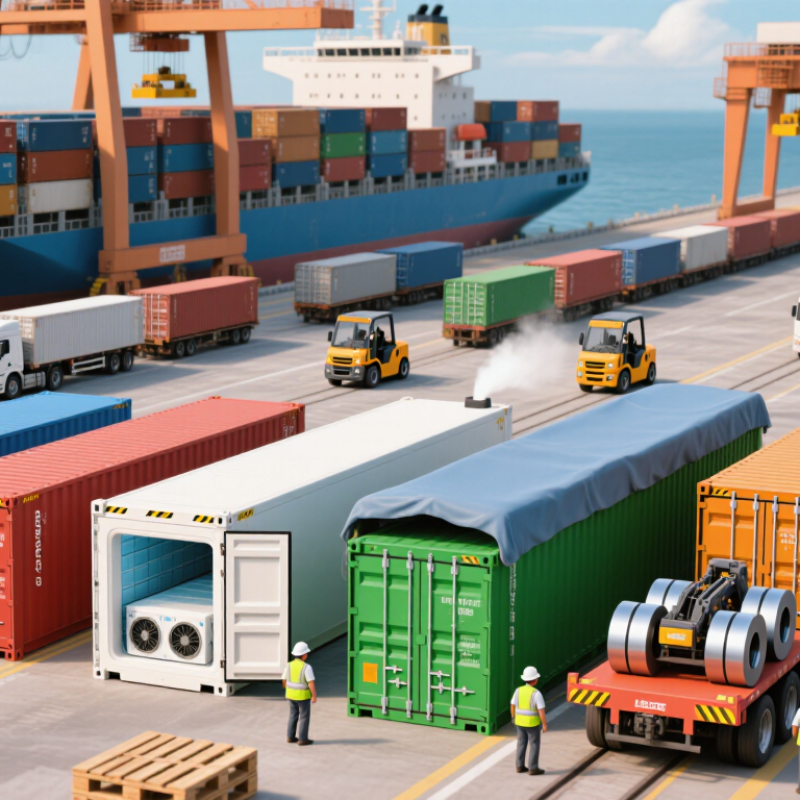
A 40-foot high-cube container adds roughly 30 centimeters of height. It helps with tall, lightweight cargo and improves usable volume. Refrigerated containers maintain controlled temperatures for sensitive goods. Open-top units support cargo loaded by crane, while flat racks suit unusually wide or heavy equipment. Tank containers carry approved liquids under strict technical requirements. Do not choose by volume alone. I have seen loading plans fail because door openings, floor strength, or axle limits were overlooked. Measure the cargo, including pallets and protective packaging.
Tips: Confirm internal dimensions with the container operator before booking. Check payload limits, door clearance, floor condition, and ventilation needs. Leave space for safe handling. Standard dimensions are useful, but they are not perfectly uniform. Ask for a current equipment specification sheet, especially when cargo is fragile, oversized, or temperature-sensitive. A simple loading diagram can expose problems early. Sometimes, choosing a smaller container prevents shifting and reduces damage.
How to Choose the Right Cargo Container for Global Shipping - Define Cargo Container Types and Their Standard Dimensions
| Container Type | Typical External Dimensions (L × W × H) |
Typical Internal Dimensions (L × W × H) |
Approx. Volume | Typical Payload Capacity | Door Opening (W × H) |
Recommended Cargo |
|---|---|---|---|---|---|---|
| 20-Foot Standard Dry | 6.058 × 2.438 × 2.591 m 19'10" × 8' × 8'6" |
5.898 × 2.352 × 2.393 m 19'4" × 7'9" × 7'10" |
About 33.2 m³ 1,172 ft³ |
Approximately 28,000 kg 61,730 lb |
2.340 × 2.280 m 7'8" × 7'6" |
Dense, heavy cargo such as machinery, metal products, packaged goods, and palletized freight. |
| 40-Foot Standard Dry | 12.192 × 2.438 × 2.591 m 40' × 8' × 8'6" |
12.032 × 2.352 × 2.393 m 39'6" × 7'9" × 7'10" |
About 67.7 m³ 2,390 ft³ |
Approximately 26,500–28,800 kg 58,420–63,490 lb |
2.340 × 2.280 m 7'8" × 7'6" |
General cargo requiring more floor length, including cartons, furniture, textiles, and retail merchandise. |
| 40-Foot High Cube Dry | 12.192 × 2.438 × 2.896 m 40' × 8' × 9'6" |
12.032 × 2.352 × 2.698 m 39'6" × 7'9" × 8'10" |
About 76.4 m³ 2,700 ft³ |
Approximately 26,500–28,800 kg 58,420–63,490 lb |
2.340 × 2.585 m 7'8" × 8'6" |
Lightweight, bulky, or tall cargo where additional internal height and volume are important. |
| 45-Foot High Cube Dry | 13.716 × 2.438 × 2.896 m 45' × 8' × 9'6" |
13.556 × 2.352 × 2.698 m 44'6" × 7'9" × 8'10" |
About 86.0 m³ 3,036 ft³ |
Approximately 27,600 kg 60,850 lb |
2.340 × 2.585 m 7'8" × 8'6" |
High-volume cargo, long packaged products, and shipments designed to maximize cubic capacity. |
| 20-Foot Refrigerated | Approximately 6.058 × 2.438 × 2.591 m 19'10" × 8' × 8'6" |
Approximately 5.450 × 2.290 × 2.260 m 17'10" × 7'6" × 7'5" |
About 28.2 m³ 996 ft³ |
Approximately 27,000 kg 59,525 lb |
Approximately 2.290 × 2.260 m 7'6" × 7'5" |
Temperature-sensitive goods such as frozen food, fresh produce, pharmaceuticals, and chemicals requiring controlled conditions. |
| 40-Foot High Cube Refrigerated | Approximately 12.192 × 2.438 × 2.896 m 40' × 8' × 9'6" |
Approximately 11.580 × 2.290 × 2.540 m 38'0" × 7'6" × 8'4" |
About 67.4 m³ 2,380 ft³ |
Approximately 29,000 kg 63,935 lb |
Approximately 2.290 × 2.540 m 7'6" × 8'4" |
Large-volume refrigerated shipments that need stable temperature control and extra vertical capacity. |
| 20-Foot Open Top | Approximately 6.058 × 2.438 × 2.591 m 19'10" × 8' × 8'6" |
Approximately 5.900 × 2.350 × 2.350 m 19'4" × 7'9" × 7'9" |
About 32.6 m³ 1,151 ft³ |
Approximately 28,000 kg 61,730 lb |
Rear doors; roof can be removed or opened | Over-height or top-loaded cargo such as stone, scrap metal, timber, and industrial equipment. |
| 40-Foot Open Top | Approximately 12.192 × 2.438 × 2.591 m 40' × 8' × 8'6" |
Approximately 12.030 × 2.350 × 2.350 m 39'6" × 7'9" × 7'9" |
About 66.5 m³ 2,348 ft³ |
Approximately 26,500 kg 58,420 lb |
Rear doors; roof can be removed or opened | Long or heavy machinery and cargo that cannot be safely loaded through standard rear doors. |
| 20-Foot Flat Rack | Approximately 6.058 × 2.438 m 19'10" × 8' platform |
Platform length about 5.650 m 18'6" |
Not enclosed | Approximately 27,000–31,000 kg 59,525–68,340 lb |
Open sides and ends | Oversized, wide, or exceptionally heavy cargo such as vehicles, construction equipment, and industrial units. |
| 40-Foot Flat Rack | Approximately 12.192 × 2.438 m 40' × 8' platform |
Platform length about 11.650 m 38'3" |
Not enclosed | Approximately 38,000–40,000 kg 83,775–88,185 lb |
Open sides and ends | Large machinery, steel structures, pipes, boats, and cargo exceeding standard container dimensions. |
Note: Dimensions, tare weight, payload limits, door openings, and usable volume are typical industry values and may vary by container design, manufacturing specification, equipment condition, route restrictions, and carrier rules. Always confirm the exact specifications before booking.